Questões de Concurso
Filtrar
5.351 Questões de concurso encontradas
Página 47 de 1.071
Questões por página:
Questões por página:
Concurso:
Prefeitura de Três Barras - SC
Disciplina:
Inglês
Skimming and scanning strategies are essential to
optimize reading comprehension in English. Analyze the
statements below:
I. Skimming is the strategy of reading a text quickly and superficially, focusing on elements such as titles, subtitles, cognates, and the first and last paragraphs, with the goal of grasping the main idea (the "gist").
II. Scanning is the strategy of rapidly searching for a specific piece of information in the text, such as a name, a date, a number, or a keyword, running one's eyes over the text without reading every word.
III. Skimming is the term used for detailed, analytical reading of a text, focusing on every word and grammatical structure for deep comprehension.
Which statements are correct?
I. Skimming is the strategy of reading a text quickly and superficially, focusing on elements such as titles, subtitles, cognates, and the first and last paragraphs, with the goal of grasping the main idea (the "gist").
II. Scanning is the strategy of rapidly searching for a specific piece of information in the text, such as a name, a date, a number, or a keyword, running one's eyes over the text without reading every word.
III. Skimming is the term used for detailed, analytical reading of a text, focusing on every word and grammatical structure for deep comprehension.
Which statements are correct?
Concurso:
Prefeitura de Cidade Ocidental - GO
Disciplina:
Inglês
Leia o texto a seguir.
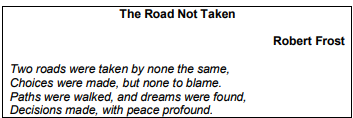
Texto inspirado em FROST, Robert. The Road Not Taken. (1916). [Adaptado].
No trecho apresentado, o uso da Passive Voice (voz passiva) contribui para mostrar que:
Concurso:
Prefeitura de Luiz Alves - SC
Disciplina:
Inglês
mostrar texto associado
Consider the following pedagogical situation:
An English teacher preparing a lesson on the text "Digital Archeology" for Brazilian high school students wants to design activities that develop critical reading skills, intercultural competence, and linguistic awareness while aligning with Base Nacional Comum Curricular (BNCC) competencies. The teacher plans to explore the text's themes of art, technology, posthumanism, and cultural mobility (artist's international trajectory). When selecting the most pedagogically sound approach that integrates language skills, cultural awareness, and critical thinking as emphasized by BNCC for English language teaching, the teacher should:
An English teacher preparing a lesson on the text "Digital Archeology" for Brazilian high school students wants to design activities that develop critical reading skills, intercultural competence, and linguistic awareness while aligning with Base Nacional Comum Curricular (BNCC) competencies. The teacher plans to explore the text's themes of art, technology, posthumanism, and cultural mobility (artist's international trajectory). When selecting the most pedagogically sound approach that integrates language skills, cultural awareness, and critical thinking as emphasized by BNCC for English language teaching, the teacher should:
Concurso:
Prefeitura de Luiz Alves - SC
Disciplina:
Inglês
mostrar texto associado
Consider the following excerpt:
"Born in 1964 in Plovdiv, Filip Popov spent several years of his childhood in Germany, where he formed his ideas for unity between art, architecture, design and technology."
An English teacher designing a reading comprehension lesson for intermediate Brazilian students analyzes this biographical sentence to identify potential comprehension obstacles. Regarding vocabulary, syntax, and cultural references that may challenge Brazilian EFL learners, and considering effective scaffolding strategies aligned with communicative language teaching and BNCC principles, which analysis is pedagogically accurate?
"Born in 1964 in Plovdiv, Filip Popov spent several years of his childhood in Germany, where he formed his ideas for unity between art, architecture, design and technology."
An English teacher designing a reading comprehension lesson for intermediate Brazilian students analyzes this biographical sentence to identify potential comprehension obstacles. Regarding vocabulary, syntax, and cultural references that may challenge Brazilian EFL learners, and considering effective scaffolding strategies aligned with communicative language teaching and BNCC principles, which analysis is pedagogically accurate?
Concurso:
Prefeitura de Luiz Alves - SC
Disciplina:
Inglês
mostrar texto associado
Read the excerpt below:
"For the first time the artist makes such a large-scale performance in the city where he was born."
An English teacher analyzing this sentence with advanced students identifies a potential ambiguity in the noun "performance" within this artistic context. When discussing polysemy, context-dependent meaning, and the semantic challenges this presents for translation into Portuguese, particularly distinguishing between "performance" as artistic presentation versus "performance" as theatrical/live art form, the most linguistically precise interpretation considering the broader textual context of an art exhibition would be_________.
Fill in the blank above and select the correct alternative.
"For the first time the artist makes such a large-scale performance in the city where he was born."
An English teacher analyzing this sentence with advanced students identifies a potential ambiguity in the noun "performance" within this artistic context. When discussing polysemy, context-dependent meaning, and the semantic challenges this presents for translation into Portuguese, particularly distinguishing between "performance" as artistic presentation versus "performance" as theatrical/live art form, the most linguistically precise interpretation considering the broader textual context of an art exhibition would be_________.
Fill in the blank above and select the correct alternative.
